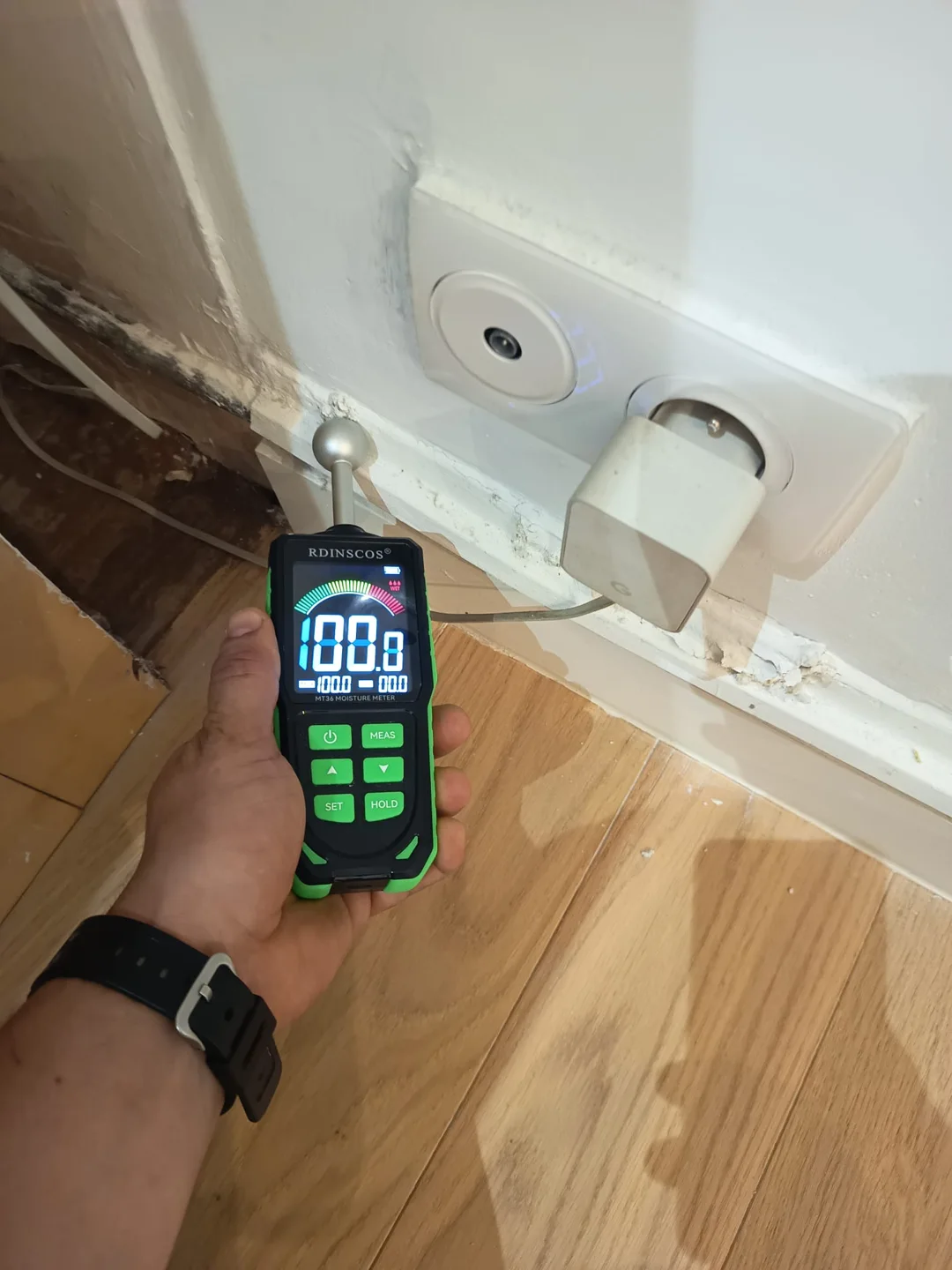
Damp walls, loose skirting boards and mould: what the marks tell us
Recurring black spots, bubbling paint or a musty smell are signs worth investigating. The position of the marks, how they change and when they appear matter more than a single photograph.
- Damp near a shower or basin, especially after use.
- A skirting board or wallpaper coming away at the bottom of a partition.
- A cold wall, persistent condensation or mould in corners.
- An area that stays damp even when the bathroom is not being used.
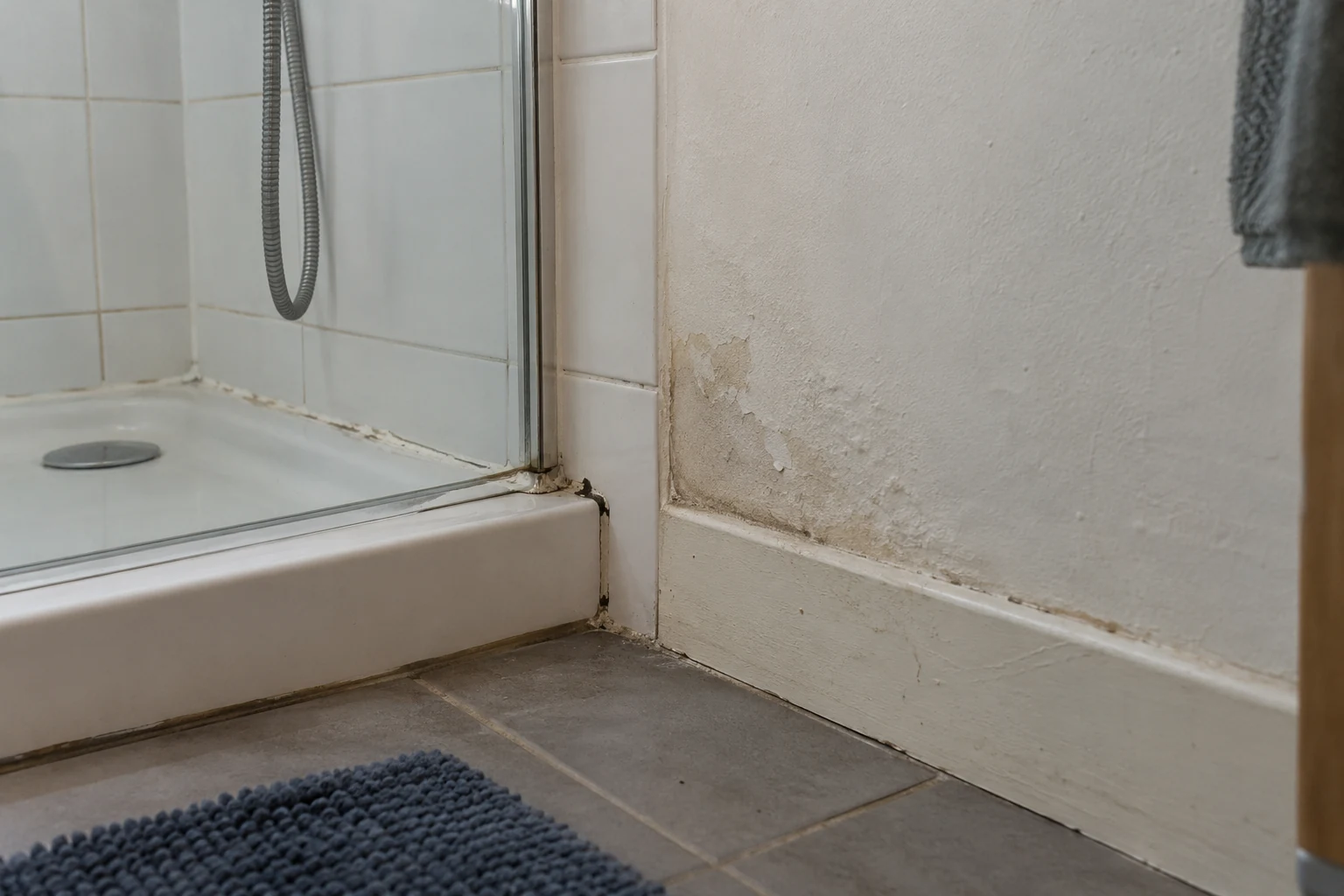
Seal, waste pipe or supply pipe: distinguish the causes
In a bathroom, three possibilities can produce similar marks: water passing through a perimeter seal, a waste pipe leaking at a fitting, or a leaking supply pipe. Replacing every seal without checking the pipework may leave the actual leak unresolved.
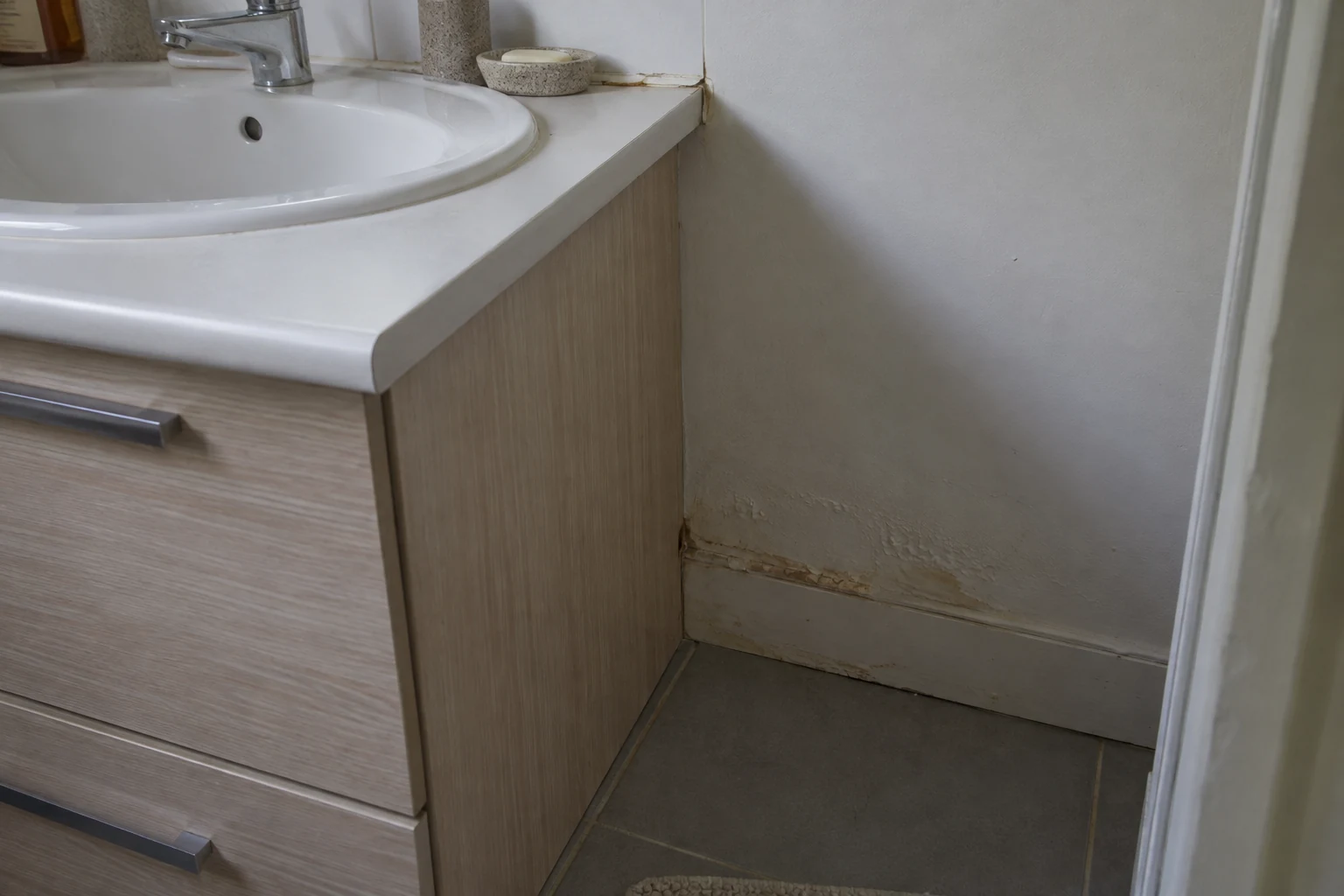
During one of our team's visits, the skirting board under a basin was damp. Testing the waste pipe showed no water passing through; a targeted test on the vanity top seal did. This distinction identified the seal that needed replacing, rather than replacing a pipe without evidence.
Other causes remain possible: condensation related to ventilation, a thermal bridge, water ingress through the facade or rising damp. A leak and a condensation problem can also occur together. They require different responses.
How we investigate a damp partition wall
We compare the affected areas and nearby installations. Moisture readings identify affected materials; thermal imaging can add information where there is a temperature contrast. These readings guide the tests; they do not identify the faulty fitting or seal on their own.
Depending on access, we check supply pipes, waste pipes and seals separately. A dye test on a seal does not answer the same question as a test on the waste outlet or trap. Results are compared with the marks observed, while noting limitations caused by inaccessible areas.
Address the cause before repainting
The next steps depend on the defect established: replacing a seal, repairing a fitting, further checks in a concealed area or addressing another cause of damp. The report distinguishes observed findings from what remains to be checked. Repairs are quoted separately.
Once the cause has been addressed, the surface still needs to dry before redecorating. We do not give a drying time based on a photograph. See examples of seals and damp partition walls.
Your questions before the visit
Does a damp skirting board mean the pipe behind the wall is leaking?
Not necessarily. In the basin case, water came from the vanity top seal and ran down to the skirting board. Checking the pipework and carrying out a targeted seal test distinguished between these possibilities.
Is stable pressure enough to rule out every leak?
It tells us about the supply pipework under the conditions of that test. It does not check shower seals or waste pipes for leaks. Those need separate checks.
Can a moisture meter tell me the percentage of water in my wall?
The readings in the reports reviewed are relative indicators specific to the instruments used. A reading of 100 does not mean the wall contains 100% water. The reading helps compare areas and should be explained in the diagnosis.
How can you tell whether it is condensation rather than a leak?
We compare the pattern of the marks, ventilation, how the rooms are used and test results. Condensation on surfaces or a cold wall is a clue, but not enough for a conclusion. What to check based on your observations.
How much does it cost to investigate the cause of damp?
An accessible area near a fixture and a pipe behind a partition require different investigations. See our four price guide categories ; the scope is clarified before approval.