Leaks in jointly owned buildings: connect the affected home to the right pipework
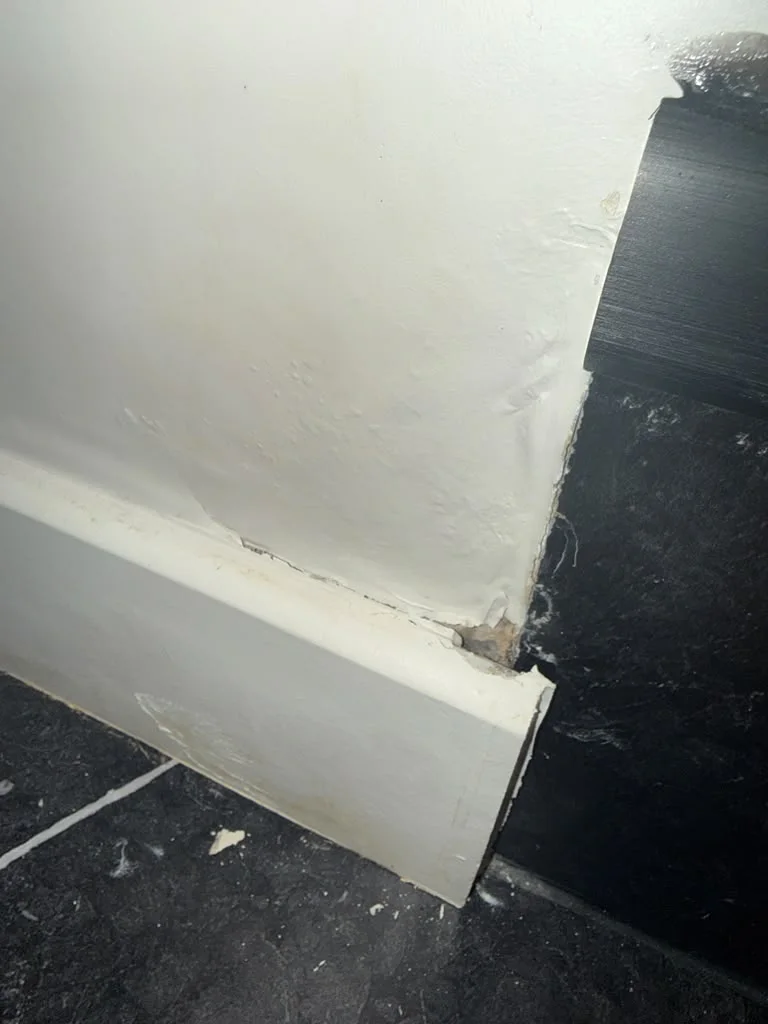
A stain in a flat or water running into a cellar may come from a private fitting, a vertical waste pipe or rainwater drainage. The investigation needs to identify the path and the defect, then provide useful reference points for the building manager and others involved in the case.
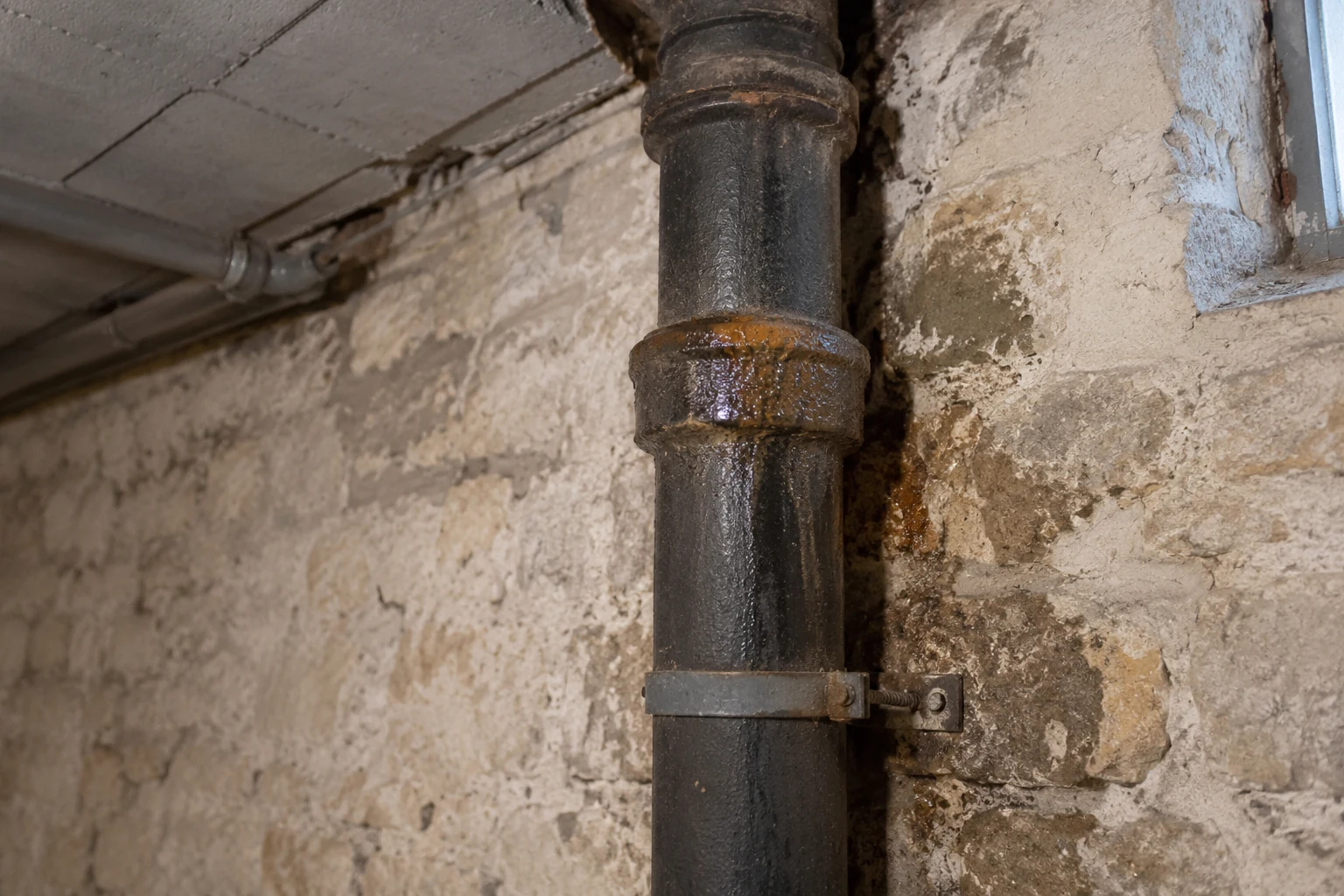
Our team's reports show the value of testing from the flats while observing the vertical pipe in the cellar. A defect at a cast iron joint can then be visible through an existing hatch without opening the floor of the flat.
Prepare access to flats, cellars, service shafts and hatches
The point to check is not always in the property where the damage appears. In one vertical pipe investigation, missing access meant a second visit was needed. An appointment that brings together the occupants and the access required helps avoid incomplete checks.
- Address, floors, affected flats and where the first marks appeared.
- Photographs, dates and any link with shower use or rainfall.
- Contact details for occupants, the caretaker and the commissioning party.
- Keys and access availability for cellars, service shafts and inspection hatches.
- Previous investigations or repairs that should not be repeated without reason.
The guide to arranging access with occupants.
A report to help decide what happens next
The report describes the pipework tested, water flow observed, the location where established, and any access still needed. If the source remains probable, further checks are specified. It provides technical facts; it does not determine liability or insurance cover by itself.
A pipe accessible from the cellar and a defect still concealed require different work. The proposed repair is quoted separately and submitted to the commissioning party. See examples of vertical pipes and water flow in cellars.
Your questions before the visit
Does a cellar leak always come from a waste pipe?
No. Supply pipes, sanitary waste pipes and rainwater drainage are different possibilities. Observations and targeted water tests help distinguish them; being near a vertical pipe is not enough.
Does the flat need to be opened up to check a vertical pipe?
Not always: a hatch or cellar access may reveal the defect. Whether the investigation can be non-destructive depends on the access actually available. The access needed for the repair may then be different.
Why might a second visit be needed?
An absent occupant, an inaccessible observation point or an additional check can limit the first visit. The report explains what was checked and what is missing, so a useful follow-up appointment can be arranged.
Does the report automatically decide who pays?
It documents the source and findings about the pipework. Cost allocation and cover are assessed by the relevant parties according to the case. What to check with your insurer.
Prepare your enquiry
Leak detection prices and scope · Other professional requirements