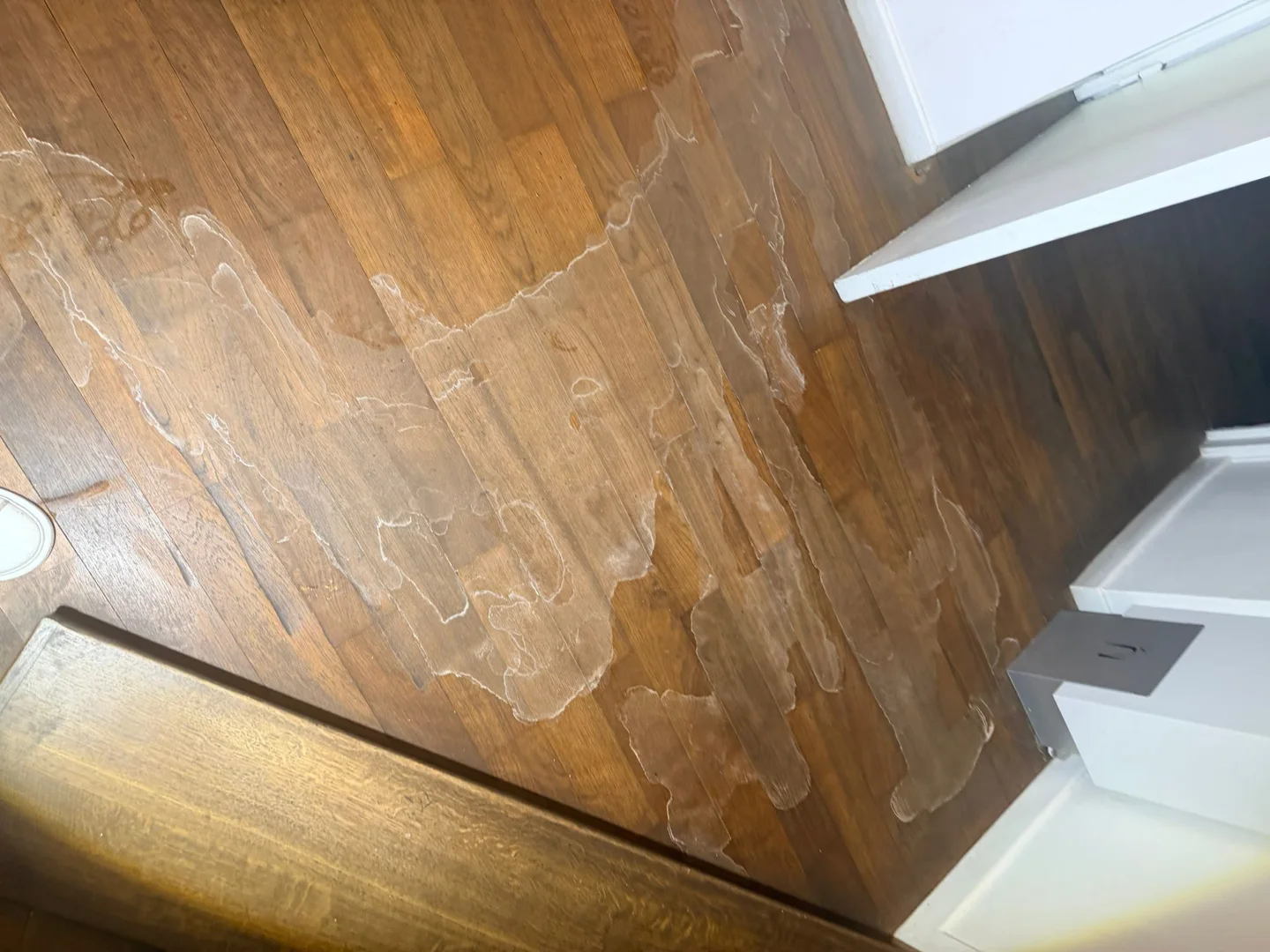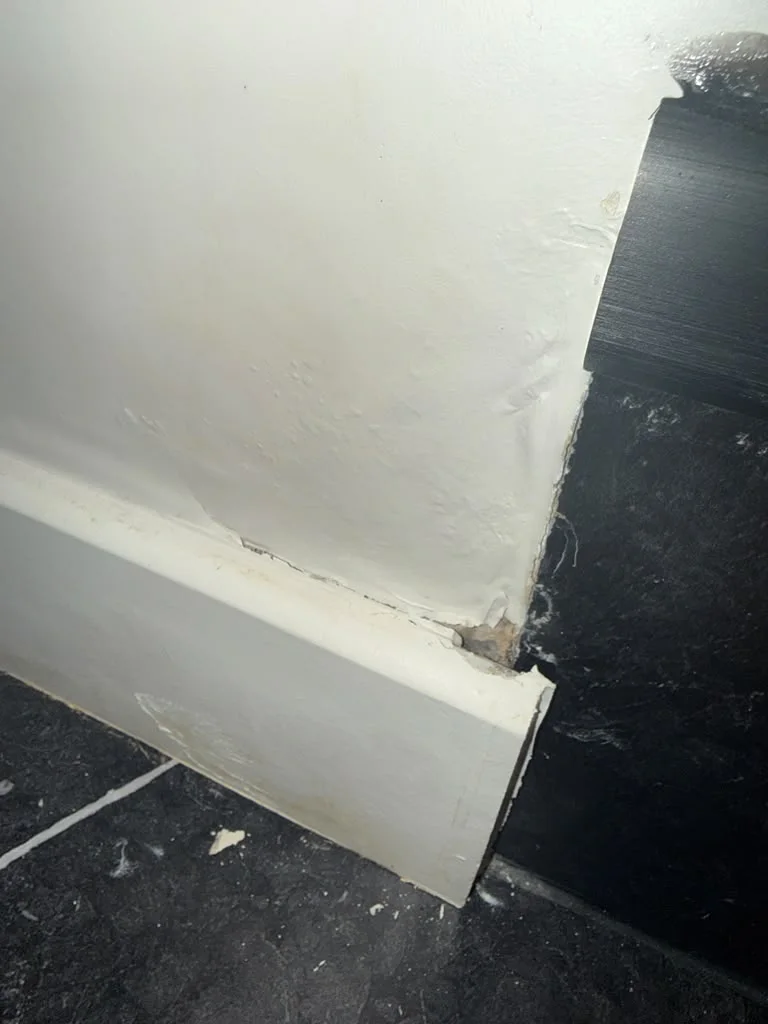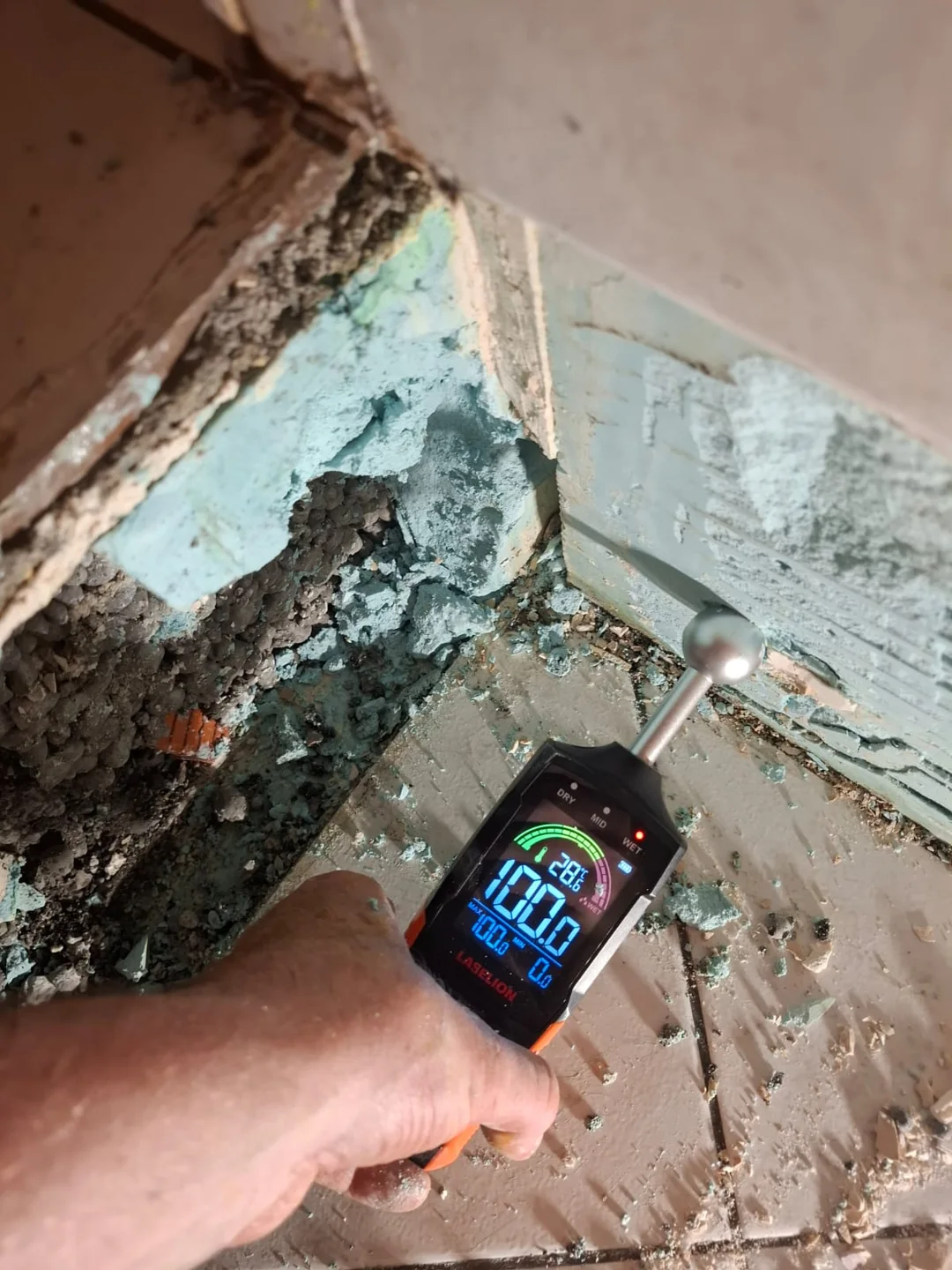
Start with the facts before considering responsibility
A neighbour calls because their ceiling is damp. Even if your bathroom or kitchen is directly above it, describe the situation before drawing conclusions about the source. The stain may be some distance from where the water first escaped.
Share photos, details of the rooms affected and when the problem occurs. The aim is to prepare the checks. Responsibility and insurance cover will be determined from the evidence in the case, rather than the position of the stain alone.
If water is still flowing, mention this in your first conversation. With an active leak, the first priority is to limit damage while taking appropriate safety precautions.
Arrange a shared time slot for both homes
Try to be available at the same time. The technician can examine the marks in the affected home, then check the suspected plumbing fixtures in the other property.
A test may require moving back and forth between the two homes. If one occupant leaves after ten minutes, or nobody can unlock a room, the checks may be incomplete. Explain any time constraints before booking the appointment.
If the owner is away, appoint someone who can actually provide access. Naming someone in an email is not enough if they do not have the keys on the day.
What the building manager can prepare
Depending on the building, the team may need access to a basement, service shaft, plant room or shared area. The syndic, the manager appointed for the co-owned building, or the caretaker can help identify the right contacts and locate the keys.
- Which homes need to be accessible?
- Who can unlock the relevant shared areas?
- Are there any plans or details of the pipework?
- Has a previous investigation already ruled out any possible causes?
- Who can approve further investigation if it is proposed?
Arrange these details before the visit, without assuming every area will be needed.
A message to help arrange the visit
“A damp mark appeared in [room] on [date]. It changes [continuously / after water is used / after rain]. The proposed appointment is [time slot]. Please confirm access to the homes concerned and tell us who has the keys to any relevant shared areas. Here are the photos and details of work already carried out.”
Add the on-site contact and the name of the person commissioning the work. Share contact details only with those who need them to arrange the visit.
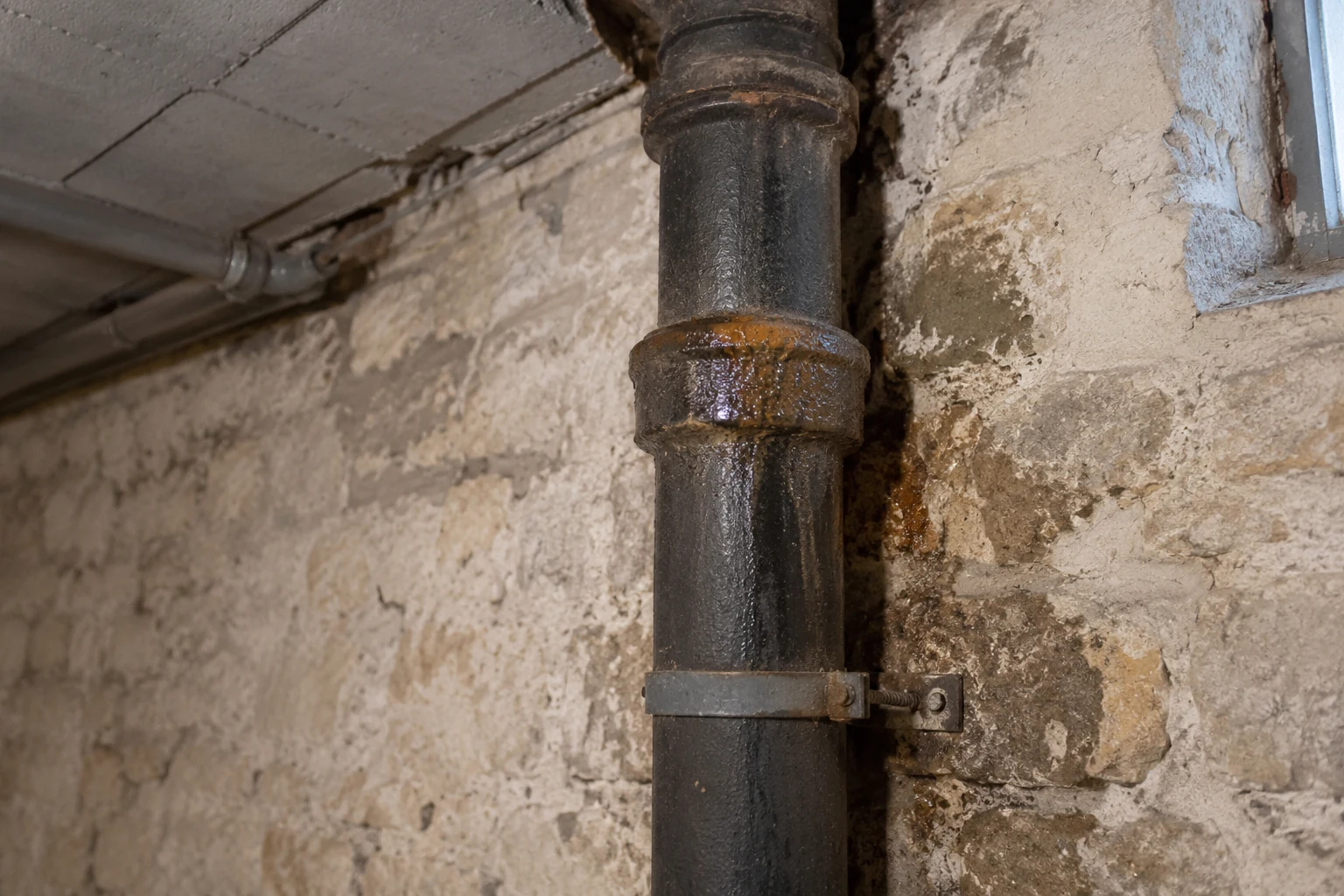
A CASE FROM THE FIELD
Basement access was just as important as access to the apartments
When water was escaping in a basement, tests carried out from two apartments linked it to the same section of waste pipe. An inspection hatch then provided access to deteriorated cast-iron pipe joints.
Two visits were needed because one area could not be accessed at first. For this kind of investigation, confirm who can open each apartment, the shared areas and the basement. Being able to contact someone does not mean a door will be unlocked when the test needs to take place.
Anonymised case adapted from one of the team's inspection reports.
Arrange a visit with your building manager ↗If an area still cannot be accessed
The investigation can begin in accessible areas, but its limits must be clear. The report will state which checks were carried out and which are still needed. Finding no evidence in an area that was inspected does not allow conclusions about pipework that remained inaccessible.
At the end of the visit, ask what comes next: further access, a separately quoted repair or sharing the report. Ask the building manager and insurer about cover; a technical diagnosis does not make that decision for them.
Need leak detection in Paris or the inner suburbs?
Arrange an investigation in a co-owned building ↗