The stain does not tell the whole story
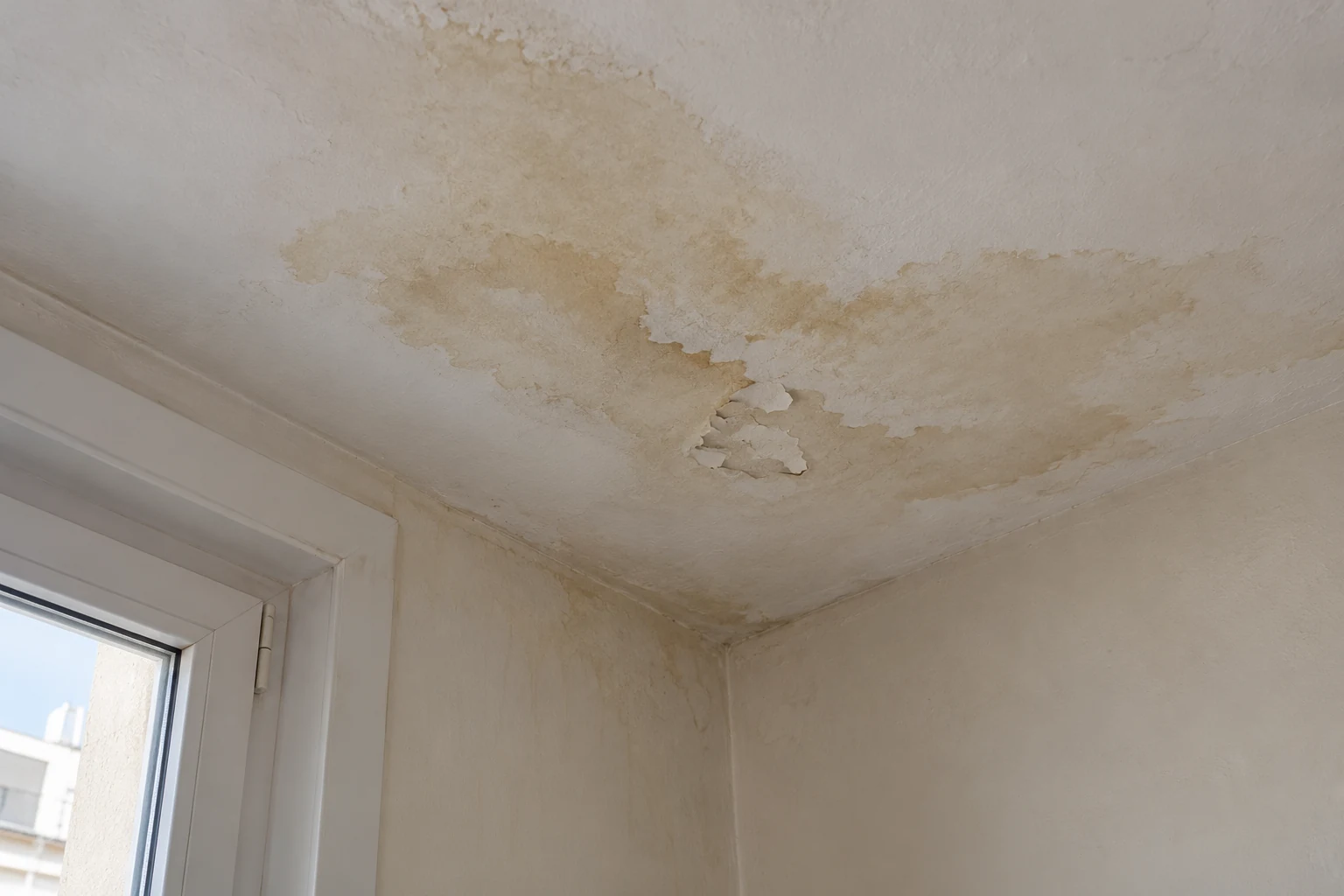
A stain appears on the bathroom ceiling. Your first instinct is to look directly above it and suspect your neighbour's shower. That is a possibility, but not yet a diagnosis: water can travel along a pipe, through a partition or across a floor before becoming visible.
The useful question is: what is supplying water to this damp area? A water supply pipe, a waste pipe used intermittently, a defect around a shower and rainwater ingress require different tests. Opening up immediately at the stain may cause damage without answering that question.
Observations that really help
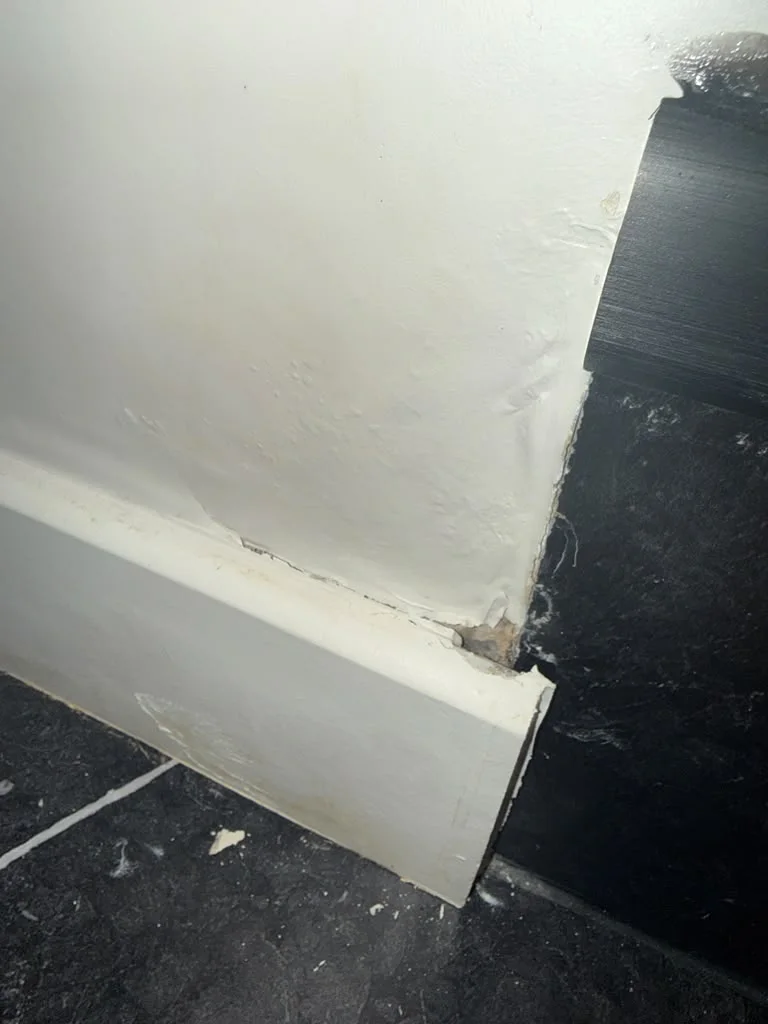
Start by noting when the stain appeared and how it changes. A few photos taken from the same viewpoint are more useful than a description from memory. Photograph the whole room too: a close-up shows the stain but loses the surrounding reference points.
- After a shower or washing machine cycle: mention the timing, even if you are not certain there is a link.
- After rain: explain whether the stain returns every time it rains or only in certain conditions.
- All the time: say whether the damp is spreading even when nobody is using any water fixtures.
- After a repair: keep the date and details of the work. A surface that is still damp does not, by itself, prove the leak is continuing.
Arrange access to your neighbour's flat
When a neighbour is affected, it is best to arrange a visit when both properties are accessible. The technician can then inspect the damage in one and check the installations in the other.
In a jointly owned building, access to a cellar, service shaft or communal area may also be needed. Notify the building's managing agent (syndic) early enough to arrange keys. Without that access, the report can describe the observations, but some possibilities will remain unverified.
Our guide to arranging leak detection with your neighbour and building manager explains the information to gather.
What the technician will check
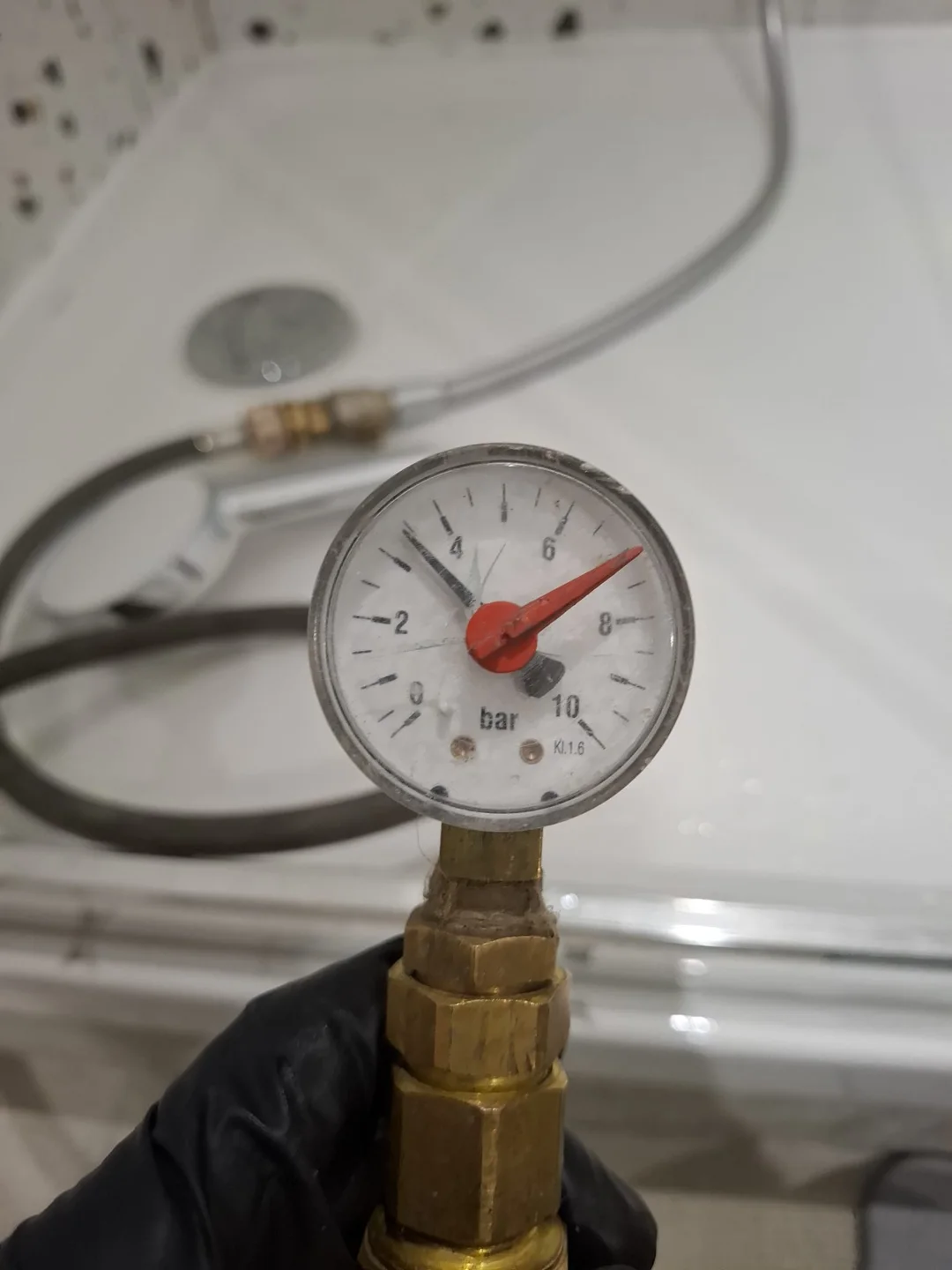
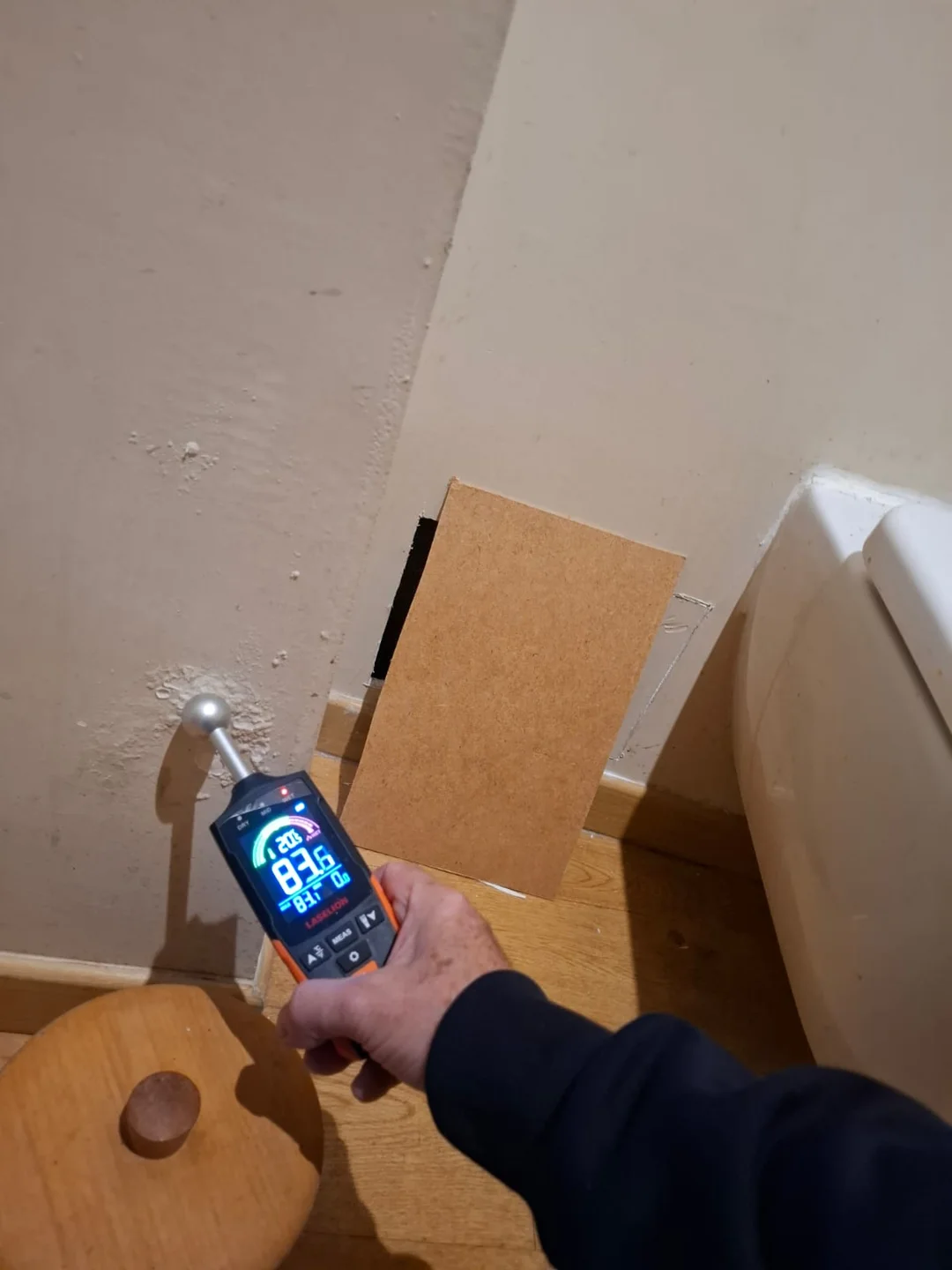
Moisture readings help define the affected areas. A thermal camera can provide clues when conditions create a temperature contrast. Dye testing can help trace a water path; a camera inspection can reveal areas the camera can reach.
These checks complement one another. A thermal image alone does not prove a leak's location, and a test with no result does not necessarily rule out a possible cause. If an opening becomes necessary, its purpose and location should be explained before you agree.
A CASE FROM THE FIELD
The leak has stopped, but the marks remain
During a documented visit, two isolation valves were dripping in the bathroom above the affected ceiling. They were repaired during the visit. Subsequent checks revealed no other leak on the systems tested.
The ceiling below still needed to dry before repainting. A remaining stain therefore does not, by itself, tell you whether the leak is still active: it needs to be considered alongside the observations and checks, with the subsequent work followed through.
Anonymised case adapted from one of the team's inspection reports.
See the steps after water damage ↗Before restoring the ceiling
Once the source is confirmed, our guide to repairing a water leak that has been located distinguishes between repairing the pipework and restoring the finishes.
Keep photos, the report and records of the work. Stopping the leak and restoring the property are two different stages: ask your insurer when to start finishing work. Repainting too soon can hide the marks while the underlying material is still damp.
If water is approaching electrical equipment or the ceiling is sagging or changing shape, keep clear of the area and get urgent help. Do not handle a wet electrical installation.
To check the claim procedure
Need leak detection in Paris or the inner suburbs?
Our investigations after water damage ↗