How it works, in plain English
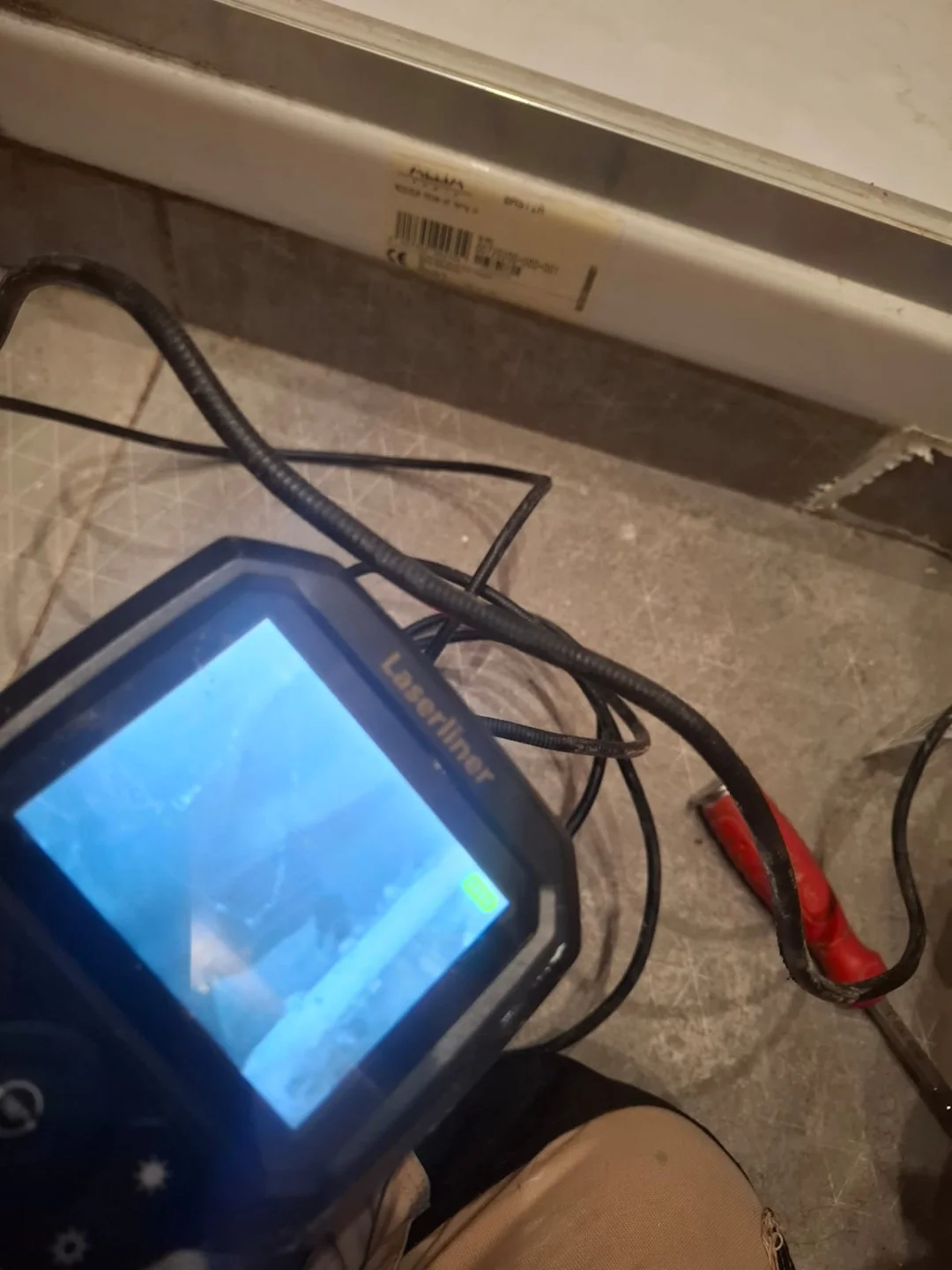
An illuminated camera mounted on a cable or push rod is fed in through an inspection chamber or access point. The images show connections and the inside condition of accessible sections: deposits, cracks, roots or visible deformation.
Depending on the equipment and site, a distance counter or small locating transmitter helps identify where an observation was made. The images are interpreted alongside how the system operates. A visible defect does not necessarily explain the full cause of the damage on its own.
When we use it
- Waste pipes and wastewater drainage
- Looking for breaks, roots or collapse
- Checks before building work or a property purchase
- Checking the condition of pipework after repair
What this check cannot establish
Suitable access is needed. A small diameter, tight bend or obstruction can stop the camera. A pressurised supply pipe cannot be inspected in the same way as a waste pipe.
Inspecting through the available access points
The technician identifies the inspection access, the section to examine and any possible obstacles. Images document the connections and defects actually visible. A service shaft, hatch or space beneath a fixture may also allow a targeted inspection, depending on access and suitable equipment.
The report specifies how far the inspection could reach. In our team's cases, images beneath a shower tray are compared with tracer tests: seeing a defect and showing that it is causing the damage are two different steps.
Linking a visible defect to the water damage
A damaged connection may offer a lead without explaining every stain. Running water or dye testing can verify a water path if the observation points are accessible. The report retains the distinction between a visible anomaly, a likely source and a located leak.
Arrange access and get a quote
Tell us which inspection chambers and hatches are available, which fixtures are involved and whether you know of any blockages. The quote specifies the investigation planned; camera inspection is not automatically added as a fixed fee per device. View prices.
Your questions before the visit
Can the whole pipe be inspected?
Not always. Diameter, bends, blockages and available access limit how far the camera can travel. The report specifies the section actually inspected.
Does a defect seen on camera prove the source of the damage?
It documents a visible defect. To link that defect to the damage, observations while water is running or other tests may be needed. Inaccessible areas remain stated in the report.
Is an inspection hatch needed?
Suitable access is required; this depends on the pipework and the check planned. An existing hatch may avoid the need for an opening to inspect, but does not guarantee that repair tools will fit through it.