A thermal camera shows surfaces, not inside the wall
An infrared camera measures the surface temperatures of walls and floors. A damp area, flowing hot water or a heating circuit can create a contrast with the surrounding materials. The image helps identify an area to examine; it does not see through the wall.
Our team compares thermal images with moisture readings and tests on the pipework. Some investigations confirm a supply leak without yet exposing its exact location: an anomaly in the image does not pinpoint the faulty connection.
When we use it
- Underfloor heating
- Damp walls and partitions
- Mapping the extent of a damp area
- Checks after repair to complement observations of drying
What this check cannot establish
Without enough temperature contrast, the image provides little information. Sunlight, surface finishes and thermal bridges can also affect interpretation. We therefore cross-check the results against other observations.
From the thermal image to checks on the pipework
We record the visible marks and the system's operating conditions. Images of relevant areas are compared with observations and, where needed, moisture readings. Further tests are selected according to the suspected cause: a supply pipe, waste pipe or water passing through a seal.
A thermal anomaly needs an explanation
A temperature difference may be caused by moisture, a hot circuit or another characteristic of the material. A dye test can check a water path; a pressure test assesses whether the tested circuit holds pressure. Comparing these findings helps distinguish a clue, a confirmed leak and a located source.
Prepare for the inspection and understand its scope
Tell us about the visible marks and the system involved. The technician will explain which operating conditions will help with thermal imaging and what access is needed. The price covers the investigation according to its difficulty and whether it involves destructive openings; using a thermal camera does not automatically add a surcharge. See prices.
Your questions before the visit
Can the camera see the leak directly behind the tiles?
No. It measures surface temperature. An anomaly may guide the investigation; tests and access then help confirm or narrow down the source.
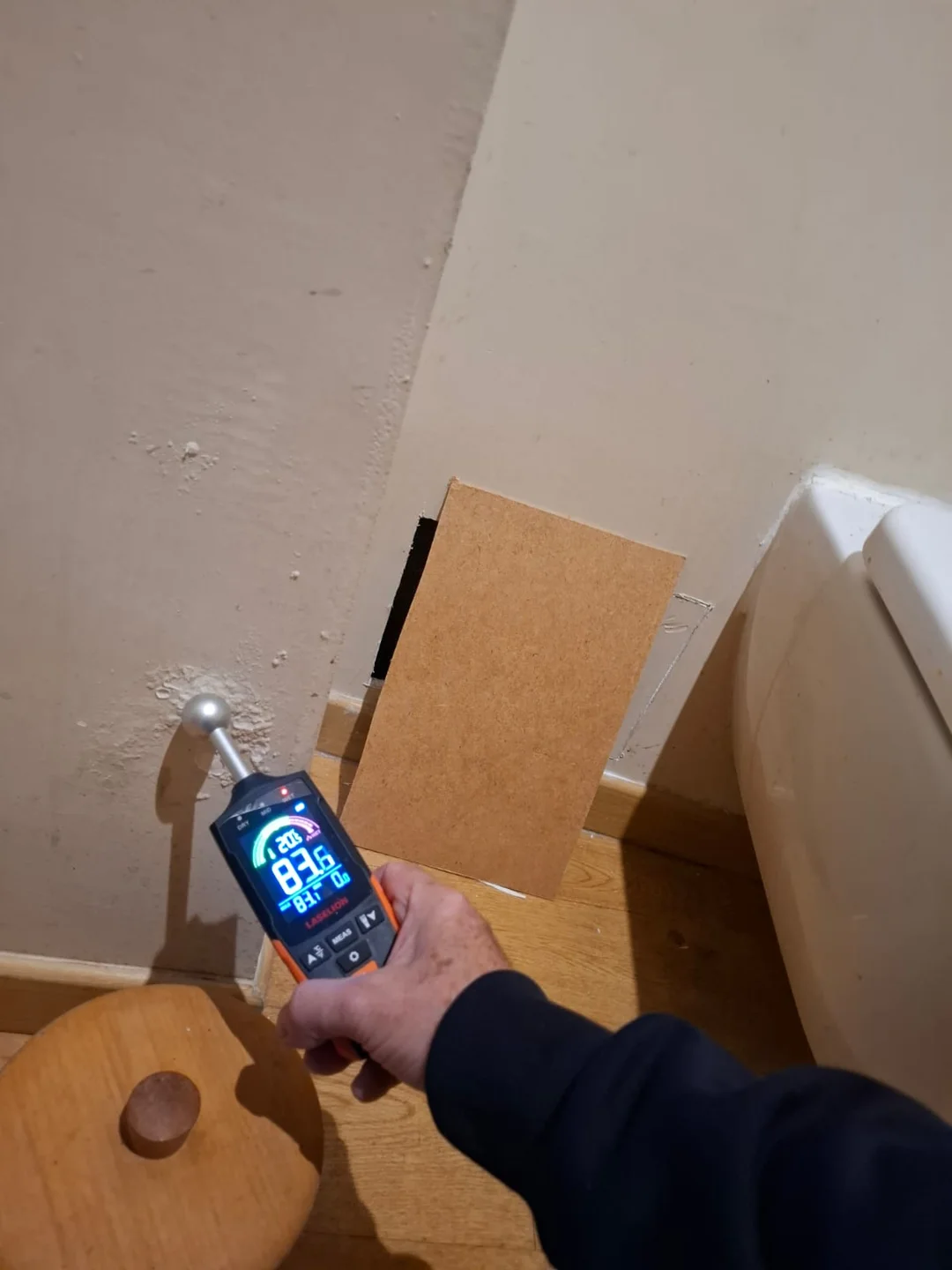
Why also use a moisture meter?
The two tools measure different things: surface temperature and an indication of moisture in the material. Comparing them helps select useful areas and checks, without automatically turning these clues into proof.
Is one image enough to decide where to open up?
The area is considered alongside the pipe layout and other results before an opening is proposed. Its location and purpose are explained before approval. Understanding targeted openings.